


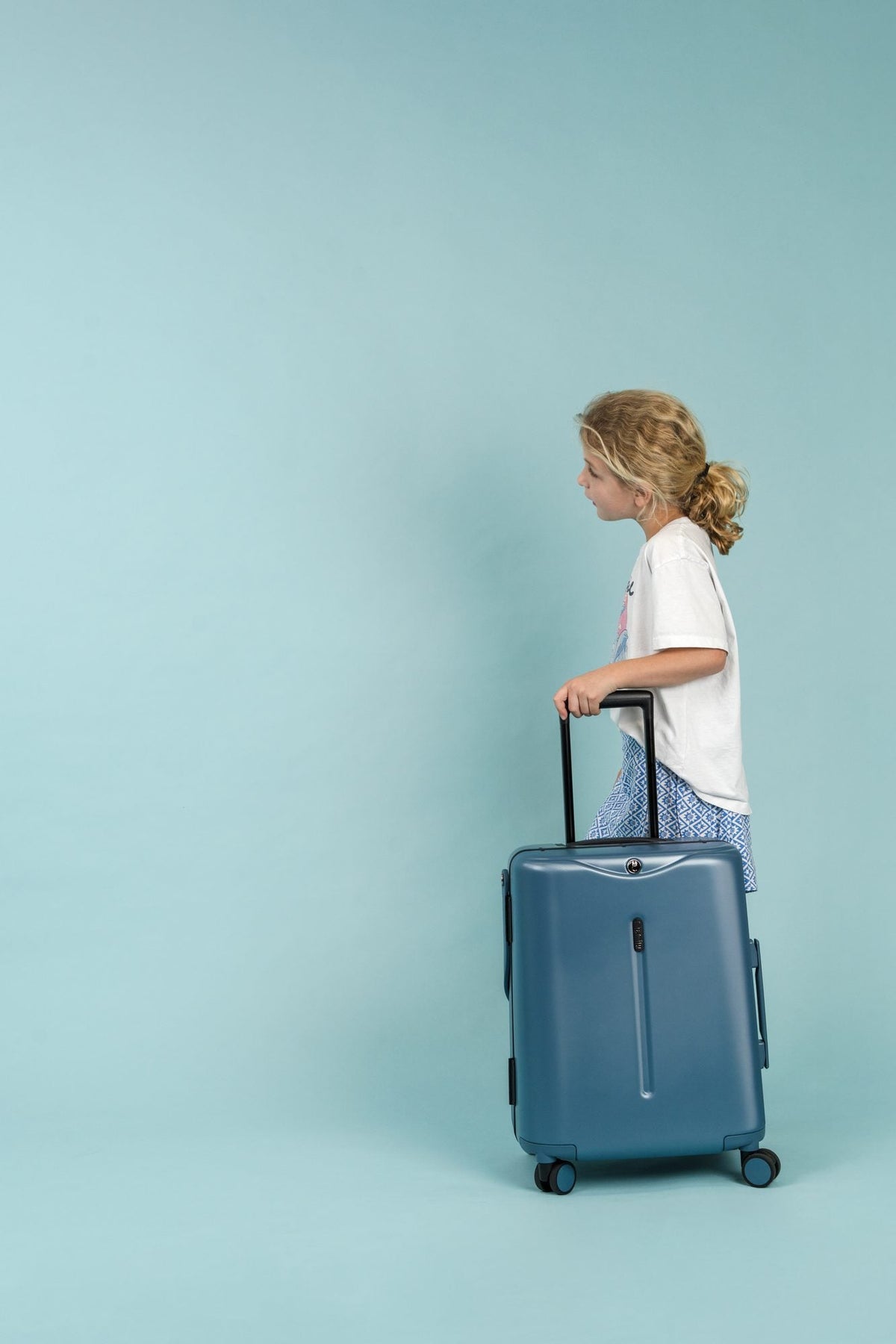
Toddlers do not mind flying. They mind waiting, being carried, and being told to stand still. A travel day in Australia has four or five waits in it before the plane moves, so the plan below is really a plan for the waits.
1. Pack a reach-first pocket
Whatever you will need in a queue goes somewhere you can reach without opening a suitcase on the floor: snacks, a drink, wipes, a small toy, the tablet, the passports. On the Carry On Plus that is the front pocket, with a thermal pocket for the bottle. On the Carry On, use the outside pocket of a backpack slid over the handle.
2. Check-in and bag drop
This is the first long stand. Belt the child onto the seat, hang your bag on the hook, and let the queue move you. If you have checked a pram, this is the moment you notice you did not need it in the terminal.
3. Security
Everything goes in trays, including the child's things. A three-digit TSA lock with no key means nothing to find in a hurry. Lift the child off before the belt; the case goes through the scanner, the child goes through the gate with you. On the Plus, put the brake on when you park the case to unload it.
4. The gate
Delays happen. Seats at the gate fill first with people who arrived before you. A MiaMily seat holds 100 kg, so when the child gets bored of sitting, the parent sits. Give the child a job: counting planes, holding the boarding passes, watching for the number on the screen.
5. Boarding
Fold the seat flat, and the case is a cabin case again. Check your carrier's cabin dimensions and weight before you fly; Australian domestic limits can be tighter than international ones, and a packed 43 litres adds up.
6. Arrival
The walk from the gate to the taxi is long, the child is tired, and the seat goes up again. At the hotel, a top-opening Plus case opens vertically, so it takes a strip of floor rather than the whole room.
Every wait is a sit, if the suitcase is the seat.
Related: which size for the trip, and exact dimensions with wheels.


